
A starter can look familiar before its identification details have been read. The main housing, adjacent solenoid and general proportions give the eye an outline to recognise, but they are not a complete product reference. Two independent starter photographs show why a useful parts-enquiry record keeps the visible label together with the body carrying it, while preserving a separate record for each item.
Read the visible fields separately
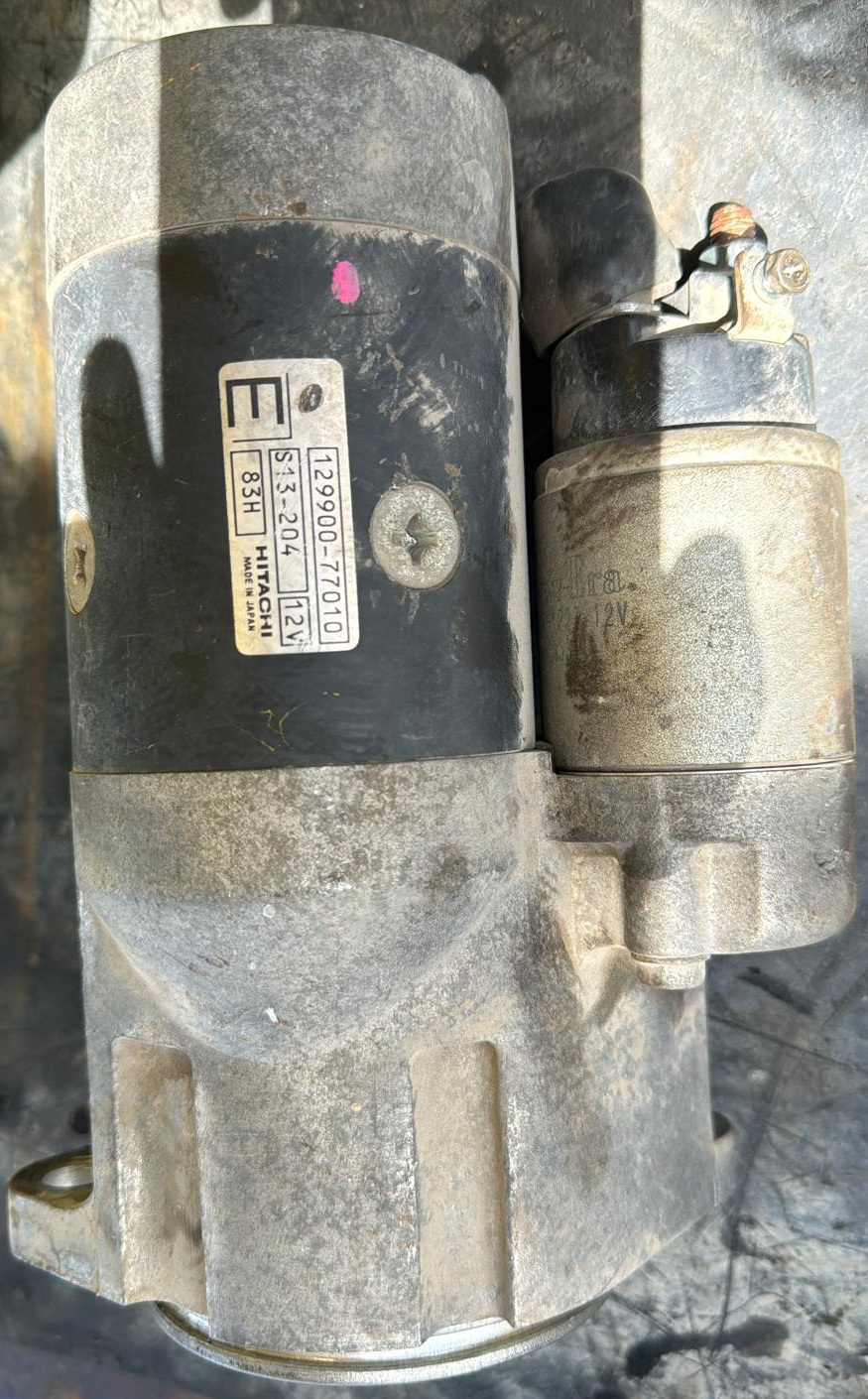
The first photograph shows a starter body with a label carrying the visible print "129900-77010", "S13-204" and "12V". Recording those fields individually is more precise than reducing the image to a description such as "a starter like this one". The surrounding housing also shows where that label sits on the photographed item.
These strings are transcriptions of visible print. They have not been established here as verified OEM cross-references or a complete specification. Keeping that distinction explicit allows an enquiry to use the photograph without turning a label into a broader claim that has not been checked.
Leave unclear characters unresolved
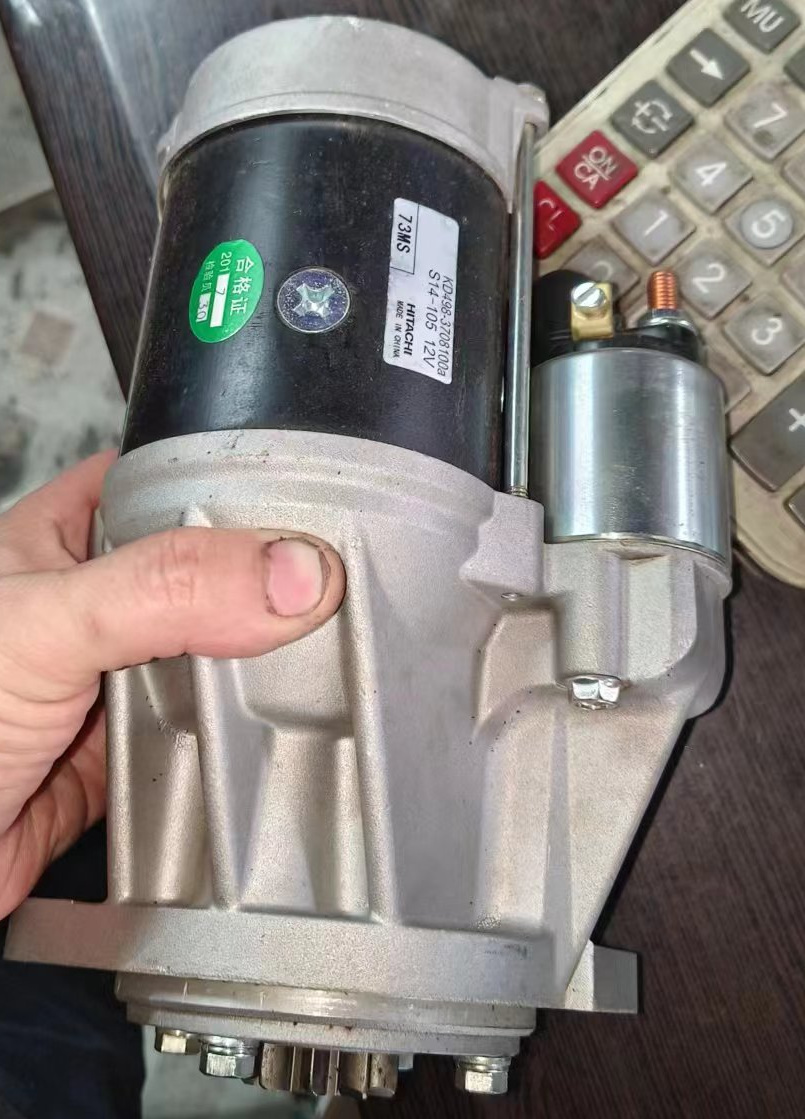
The second photograph shows a hand-held starter with "S14-105" and "12V" visible on its label, alongside the body and adjacent solenoid housing. A longer string is not sufficiently clear for confident transcription and is left untranscribed in this record.
An uncertain character should remain unknown. Do not complete a partly legible string from another starter's label or from an expected number format. If that field is needed for the enquiry, request a clearer record of it. A short, accurate transcription is more useful than a longer one containing an unmarked guess.
Keep one record for each item
These are independent examples, not one starter photographed before and after work. Their printed references differ. Both labels visibly include "12V", but that shared marking alone does not establish interchangeability, matching dimensions or suitability for the same equipment. Any relationship between the two items needs separate verification.
The practical record should therefore keep each photograph, its readable fields and its unresolved details together. Do not merge the clearer characters from one item with the obscured characters of another to create a single, apparently complete reference.
Let the body provide context
A label close-up and a body view have complementary jobs. One records characters; the other identifies the object carrying them and shows the visible arrangement of its housings. Surface cleanliness, dust and paint should remain part of the photograph rather than become a conclusion about newness, condition or performance.
Brand names printed on the photographed labels belong to those visible records; their presence does not establish authenticity, our manufacture or brand authorisation. These images support identification discussions, not output testing, stock claims, verified fitment or repair results.
Questions and Answers
Which fields are readable in the first photograph?
The visible label includes "129900-77010", "S13-204" and "12V". These are recorded as photographed print, not as independently verified OEM cross-references.
What can be transcribed from the second label?
"S14-105" and "12V" are visible. The longer string is left untranscribed because its characters are not sufficiently clear in this record.
Does the shared "12V" marking establish interchangeability?
No. One shared marking does not establish the complete specification, physical match or equipment suitability. Those relationships require separate verification.
Do the photographs show one starter before and after work?
They are independent examples with different visible references. No shared machine or before-and-after relationship is established.
Does a clean surface or printed brand name establish condition or authenticity?
No. Surface appearance does not establish condition or performance, and a photographed brand label alone is not authenticity or authorisation evidence.