
A starter or alternator part number is a useful starting point, but the installed arrangement adds context that a number alone cannot show. EexcavaStart field records include installed electrical-component views, connector details and a starter drive-end view. Together, these separate examples help explain what needs to be compared when discussing a replacement.
The unit and its installation environment
Inside an engine bay, brackets, cables, hoses and access openings surround the electrical components. The installed view helps relate a part reference to its location and orientation. It can also clarify which connection or mounting side is being discussed when several components appear close together.
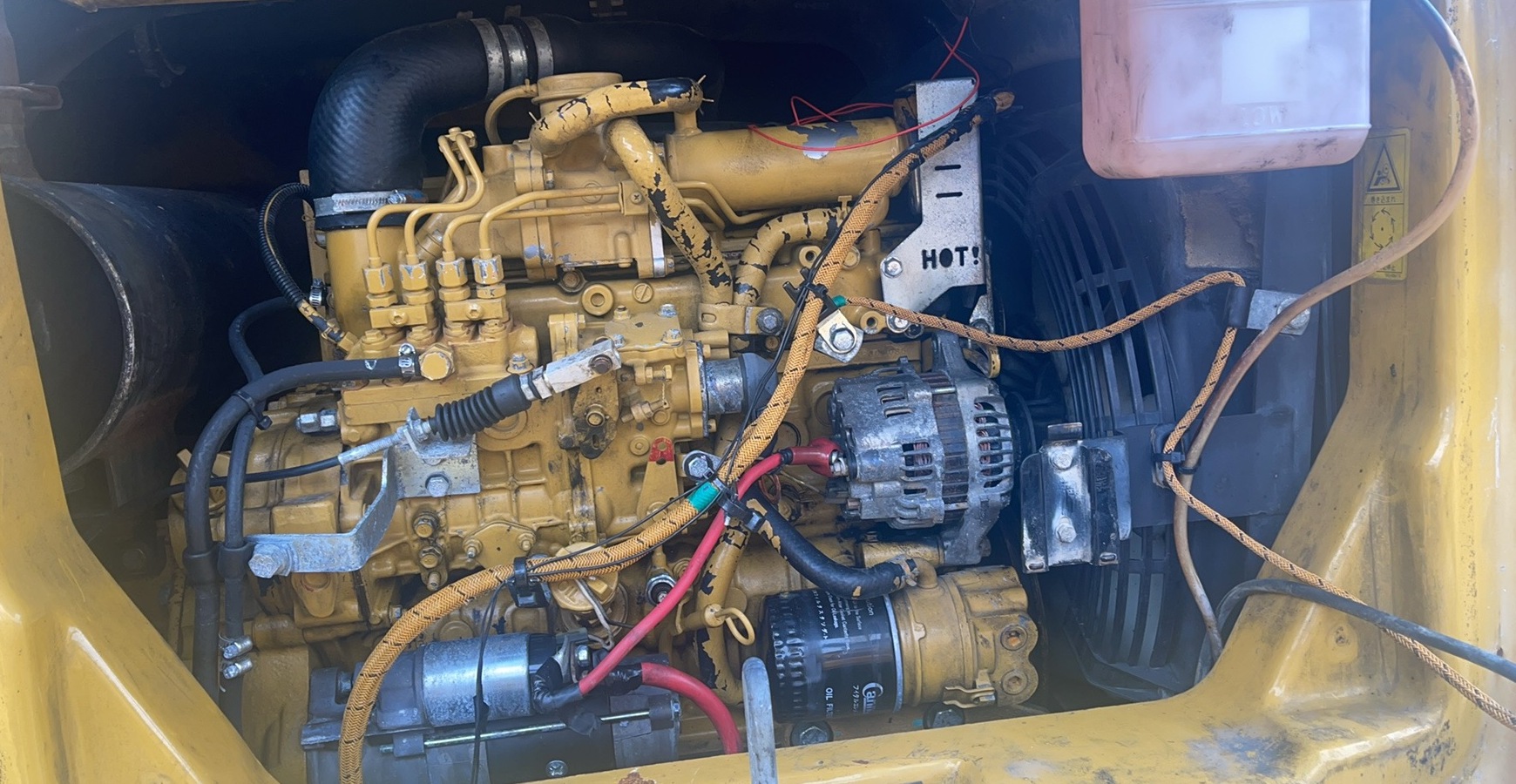
This context does not independently establish compatibility. Similar-looking starters or alternators may have different mounting arrangements, connection requirements or other equipment-specific details. A proposed replacement must be checked against the original unit and the relevant equipment information rather than selected from appearance alone.
Connector features are part of the identification
A connector face reveals the visible opening and locating features; another angle may clarify the housing, latch or cable exit. These details help describe a connection accurately. A connector close-up in this collection is a separate electrical-identification example, not proof that it belongs to the starter or alternator shown elsewhere.
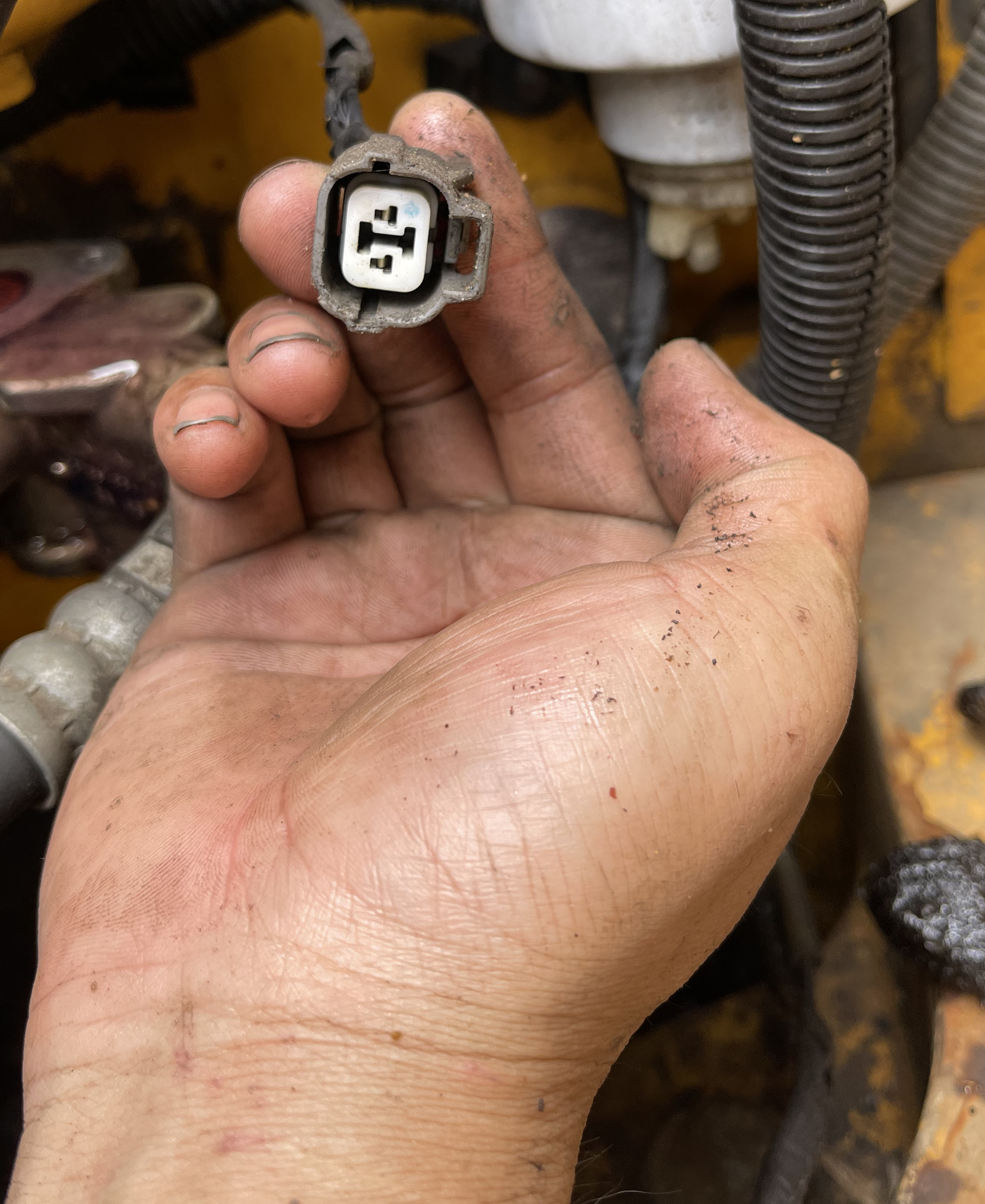
Housing colour, wire colour and the number of visible cavities are not pin assignments. They do not establish circuit function or wiring compatibility. Any electrical specification or connection requirement that has not been verified should remain unconfirmed in the parts discussion.
Mounting and drive-end details need their own comparison
The starter drive-end record shows the visible gear outline, mounting face and mounting openings. These features provide useful physical references alongside the original part number. The image does not establish a gear tooth count, dimension, rating or direct replacement match unless that detail is separately verified.
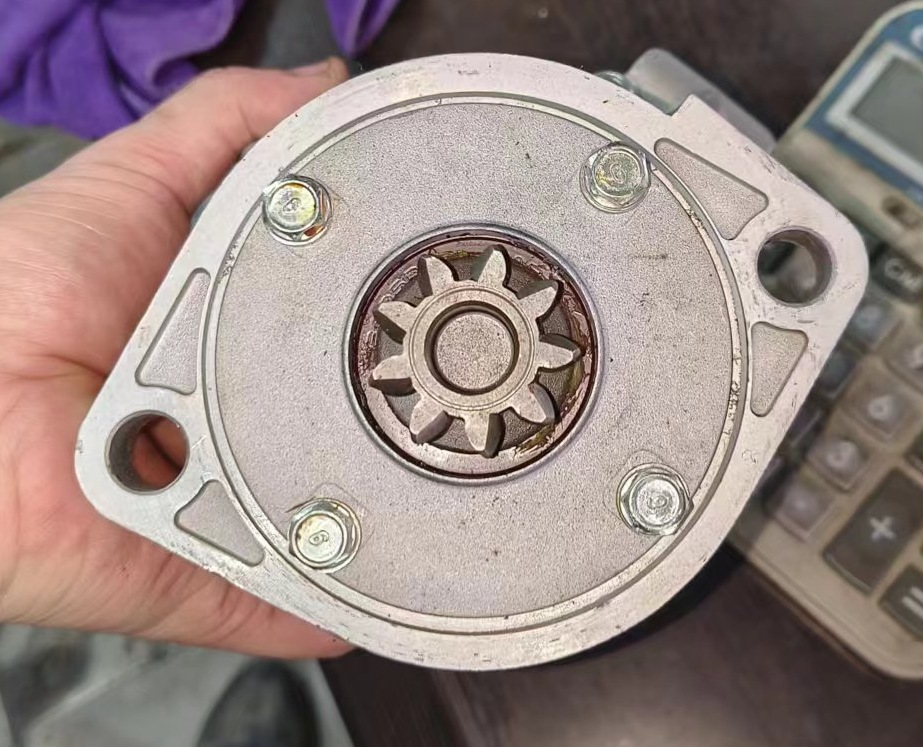
If the original reference and visible features disagree with a proposed replacement, keep that difference explicit. One matching number or a similar housing should not override a mounting or connection discrepancy. Clearly identified measurements and verified rated information can support the comparison when available.
Rear connections add information the front cannot show
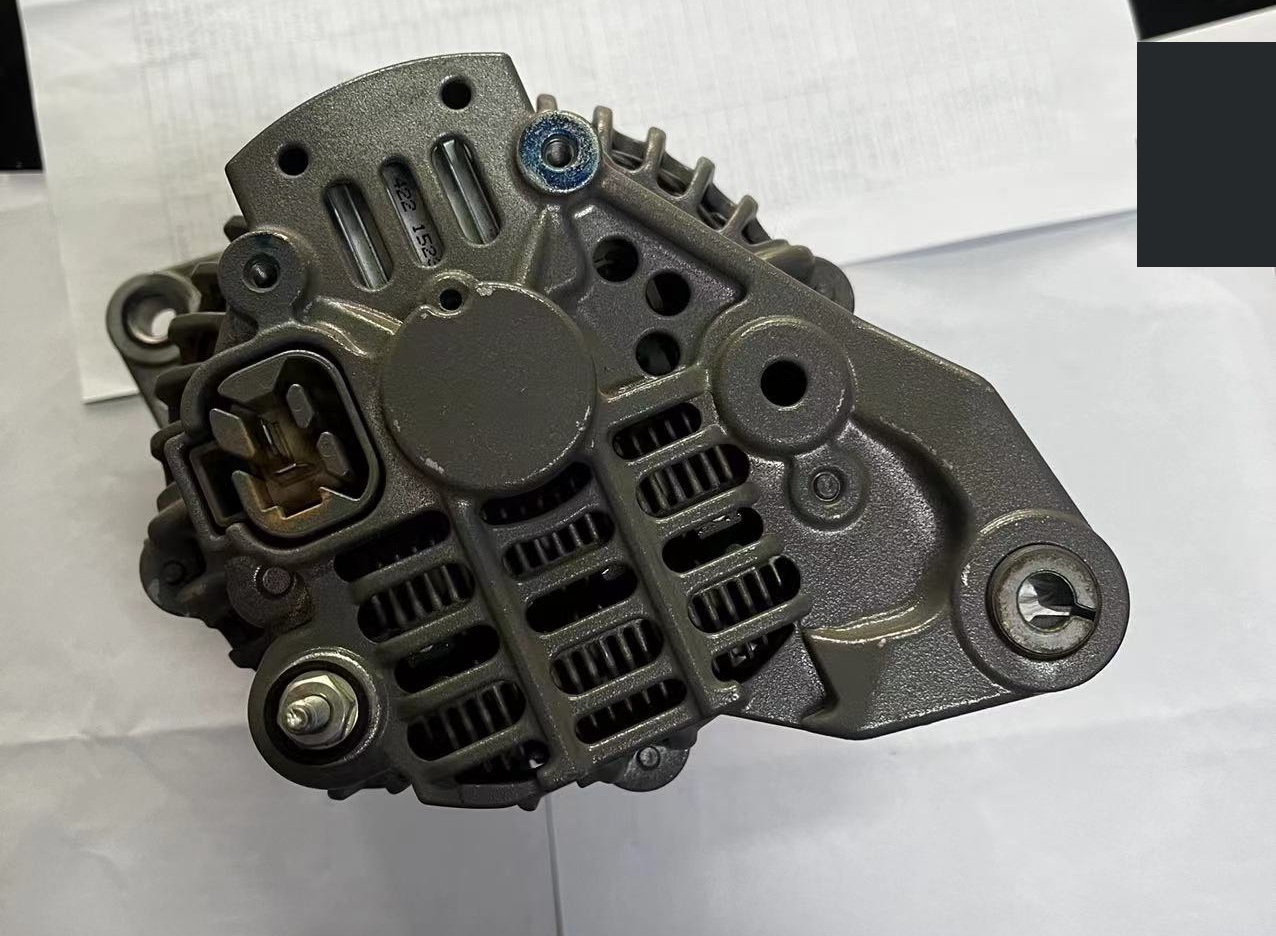
An alternator rear view helps distinguish a connector opening, terminal layout and rear-cover outline. Those are different references from a front pulley view. Neither angle should be treated as the complete description of an otherwise undocumented unit.
The rear-connection photograph in this collection is a separate alternator example, not the reverse side of the starter photograph. Preserving that distinction prevents a useful pair of illustrations from becoming a false multi-angle record of one product.
Pulley and belt context remains a separate record
The visible pulley grooves, axial position and surrounding space can support an alternator enquiry alongside the original part information. An installed belt-and-alternator close-up gives local arrangement rather than a complete view of a removed assembly.
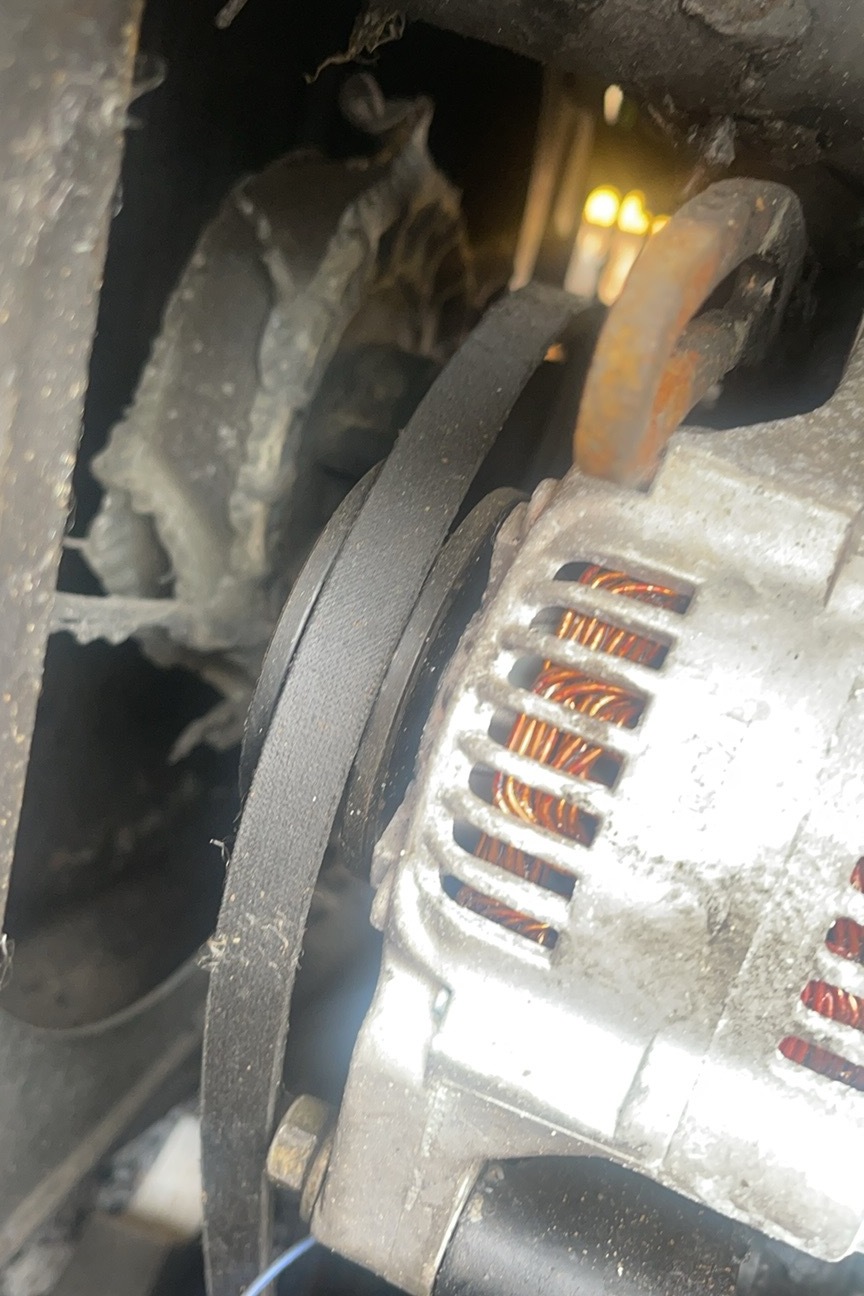
Visible belt printing should remain exactly as recorded. Missing characters are not completed from similar digits, and the installed arrangement is not proof of a particular tension or a successfully completed replacement. The photograph contributes context rather than a performance result.
For additional, separate examples of the belt face, adjacent pulley groove and a visible span near an alternator and fan, see The Belt Face and the Drive Around It. These field views are not a complete routing diagram, a tensioning procedure or evidence that two belts interchange.
What these records can and cannot tell us
Dust, worn surfaces and restricted access are part of the recorded equipment environment. They do not prove that a component has failed or identify the cause of a fault. These records show different field examples, not a continuous repair, an installation procedure, a completed diagnosis or a test of a currently listed product.
For a starter or alternator enquiry, bring together the equipment model, readable original-part references and the relevant mounting and connection details. Keeping visible facts separate from unverified information gives the replacement-parts discussion a clearer starting point.
Starter and alternator identification FAQ
The following answers are provided by EexcavaStart as general parts-enquiry guidance.
What should a starter or alternator enquiry include?
Include the equipment model, readable original part number, installed location, mounting arrangement and connection details. Add verified rated information and clearly identified measurements where available. Do not copy a rating or dimension from another component.
Does an installed view confirm that a replacement will fit?
No. It helps explain the location, orientation and surrounding space. Fitment still requires comparison with the original unit and equipment-specific information.
Does a similar connector prove the wiring is compatible?
No. Compare the visible housing, locating features, latch and cable exit, then verify the electrical connection requirements separately. Colour and cavity count alone do not establish pin function.
Are all the connectors in this collection associated with the same starter or alternator?
No. The collection brings together separate field examples. A close-up is an identification reference, not evidence that it belongs to another unit shown in the article.
What if a part-number match conflicts with the mounting or connection details?
Record both pieces of information and make the difference clear. Further verification is needed before selecting a replacement; a visual resemblance or one matching reference does not resolve the conflict.
Do these images show a confirmed fault or product performance test?
No. They document visible field conditions and identification details. They do not establish a fault cause, successful repair, product rating or direct match to an offered SKU.