
Alternator selection
How to Choose an Excavator Alternator by Specification
Match voltage, amperage, pulley, mounting, connector and engine application before approving an alternator replacement.
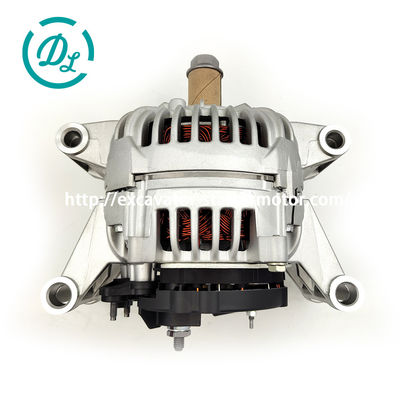
Use the original reference and charging-system rating
Begin with the alternator label or parts-manual number. Confirm system voltage and rated current. A higher amperage unit is not automatically a safe upgrade because cable size, regulator strategy, pulley and mounting loads must suit the machine.
Compare the mechanical interface
Check mounting-ear position and spacing, pivot and adjuster holes, case diameter, shaft and pulley type, belt alignment and rotation. Compare the main output terminal and regulator plug from clear rear photos.
- 12V or 24V system
- Rated amperage
- Pulley grooves and diameter
- Mounting pattern and belt alignment
- Output terminal and regulator connector
- Engine and machine application
Confirm why the original alternator failed
Before fitting a replacement, inspect batteries, belt condition, cable resistance, grounds and the charging-control circuit. An unresolved wiring or battery fault can make a good replacement appear defective or shorten its service life.